
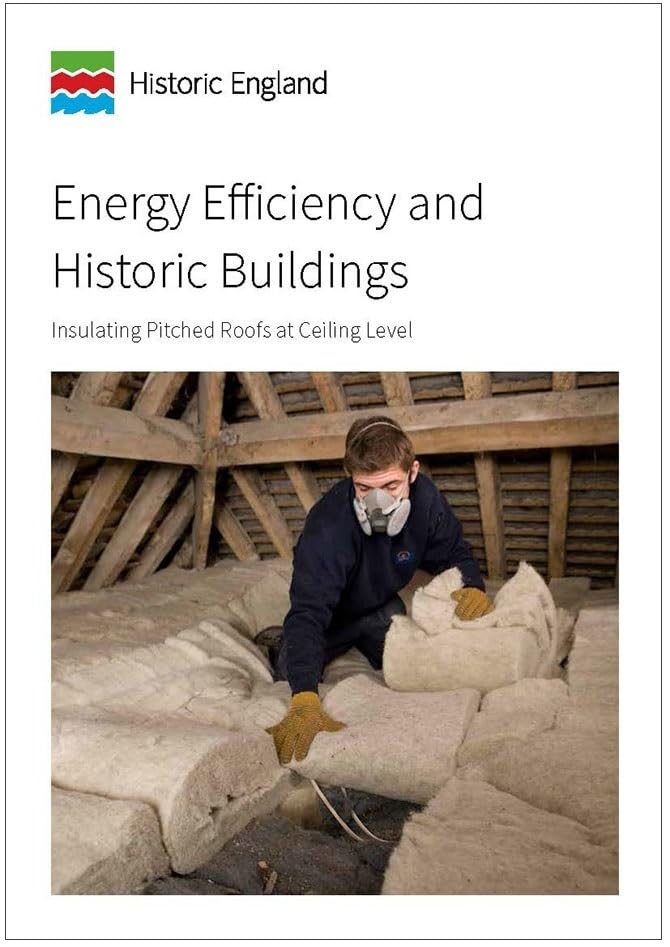
Energy Efficiency and Historic Buildings: Insulating Pitched Roofs at Ceiling Level (Historic England Guidance)
Product details
| Management number | 233623232 | Release Date | 2026/06/27 | List Price | US$7.82 | Model Number | 233623232 | ||
|---|---|---|---|---|---|---|---|---|---|
| Category | |||||||||
This guidance note provides advice on the principles, risks, materials and methods for insulating pitched roofs at ceiling level. When insulation is placed in this position, the roof is often referred to as a ‘cold roof’. Insulating above the top floor ceiling is one of the easiest and cheapest means of improving the energy efficiency of buildings and such work can be carried out successfully in older buildings if approached with some care. Even very thick layers of insulation will not cause problems if installed with materials that are compatible with the existing construction. However, the installation can be made much more difficult if part of the ceiling to the top floor rooms is within a pitched roof space. The installation of insulation at ceiling level allows high levels of ventilation to be achieved within the roof space above, either through eaves ventilation or through the gaps between tiles. This ventilation is extremely beneficial in reducing the danger of rot within roof timbers and also allowing any interstitial condensation occurring within the insulation to evaporate harmlessly away. Its main disadvantage is in restricting the potential use of the roof space. Installing insulation at ceiling level is usually possible without any modification to significant parts of the building. However, it is important that the significance of a building is not compromised by alterations to install insulation, such as changing the appearance of the roof with roof ventilators or removing historically significant plaster ceilings. Such changes are likely to require consent if the building is listed. Any change to the external appearance of a roof in a conservation area may also require permission. In each case all proposed changes should be discussed in advance with the local planning authority. This guidance forms one of a series of thirteen guidance notes covering the thermal upgrading of building elements such as roofs, walls and floors. Read more
| ISBN10 | 1848024371 |
|---|---|
| ISBN13 | 978-1848024373 |
| Language | English |
| Publisher | Historic England |
| Dimensions | 8.27 x 0.07 x 11 inches |
| Item Weight | 4.3 ounces |
| Print length | 28 pages |
| Publication date | July 29, 2016 |
Bestseller ranking
Codes & Standards




Customers who viewed this product also viewed
Womens Compression Socks
Correction of product information
If you notice any omissions or errors in the product information on this page, please use the correction request form below.
Correction Request Form